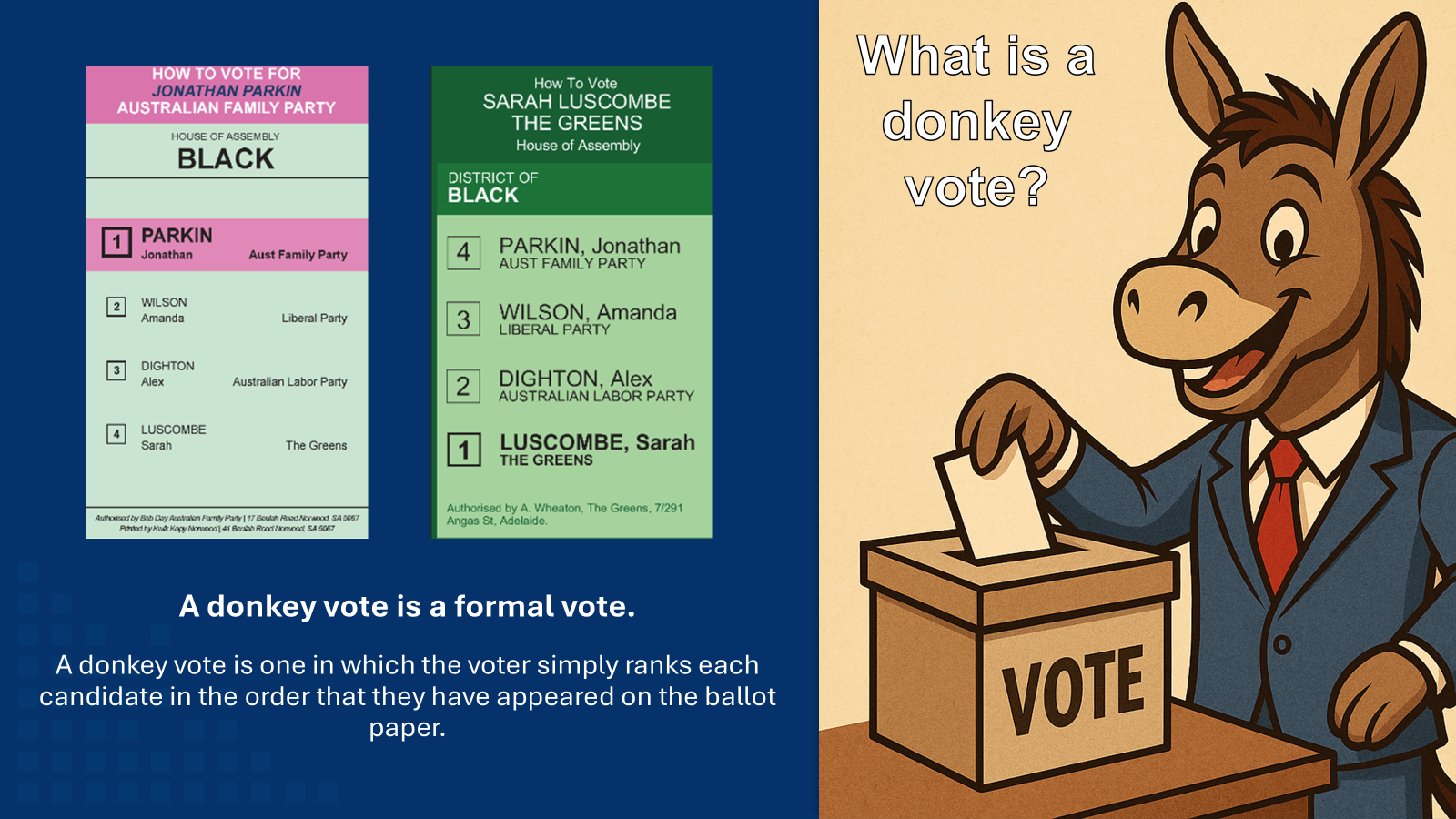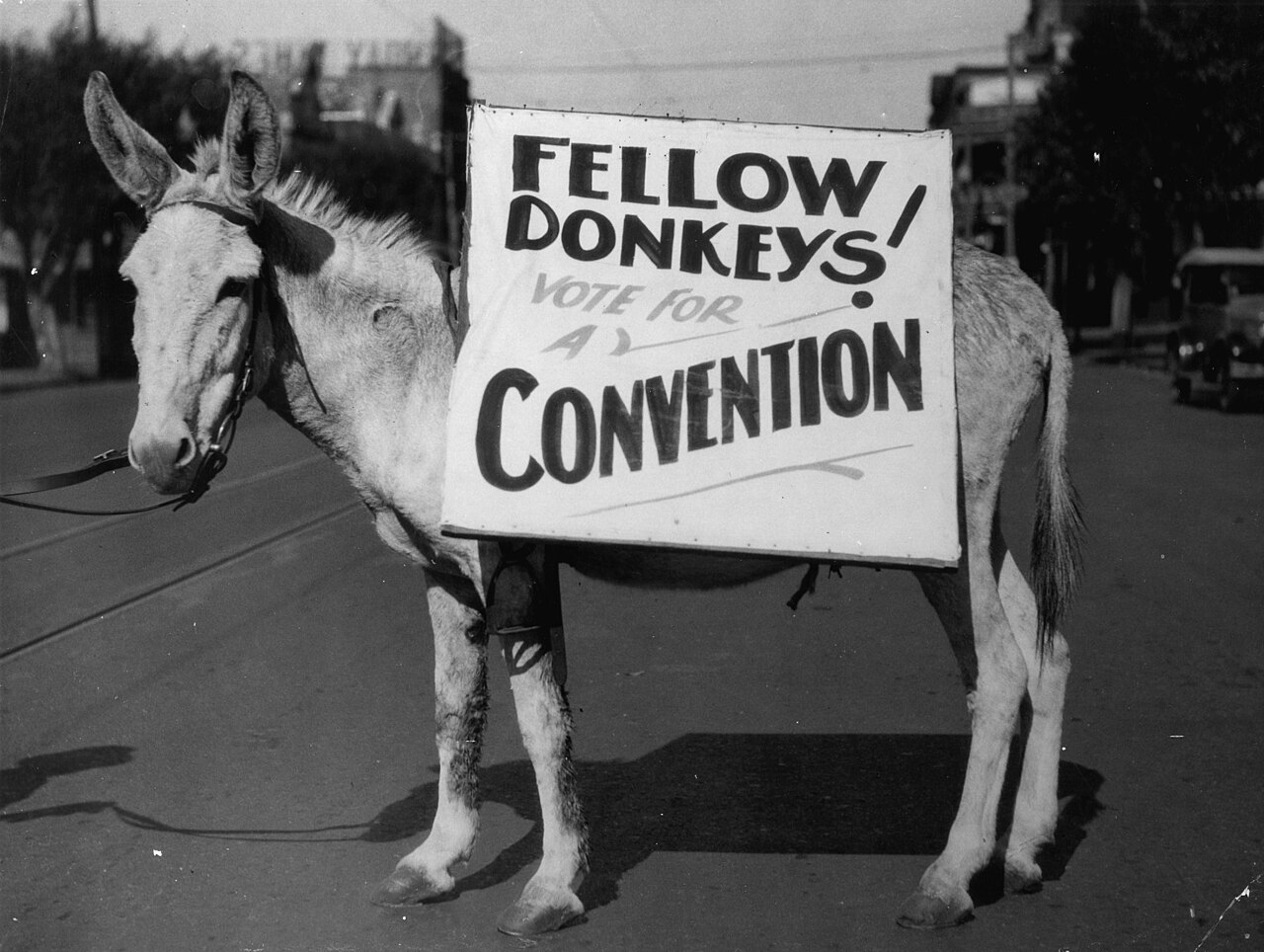
News released has spotlighted the donkey vote as one of the uniquely Australian terms that has evolved alongside Australia's democratic history.
While the term is now firmly associated with elections, its origins are less well known.
The earliest recorded Australian use of donkey vote dates back to Tasmania in 1895, when it referred to additional voting rights granted to people who owned land, property or businesses. The expression has been linked to an anecdote often attributed to American statesman Benjamin Franklin, which questioned whether voting rights should depend on property ownership rather than a person's experience or judgement.
Over time, the meaning of donkey vote shifted significantly. According to the Oxford English Dictionary, the modern electoral meaning has been in use since 1955 and is defined as:
Australia's preferential voting system and compulsory voting laws have helped make the term part of the national political vocabulary. While some donkey votes may result from a voter choosing the simplest way to complete a ballot paper, the term is also commonly associated with protest voting or expressions of disengagement. *Note; Their is no way to determine that it is not actually the preference order for a voter.
Today, donkey vote remains a distinctive part of Australia's electoral language and reflects the long history of voting practices, political participation and democratic debate in Australia.
For those of us working in elections, understanding terms such as donkey vote offers an interesting insight into how electoral language develops alongside the systems and processes that support Australian democracy. It is a reminder that the words we use to describe elections often have histories that are just as fascinating as the elections themselves.
Source: Oxford English Dictionary, “donkey vote (n.), sense 2,” June 2026.
https://doi.org/10.1093/OED/7797997285.
News source:
www.oed.com/discover/new-words-from-around-the-world-in-the-oed-june-2026-update/